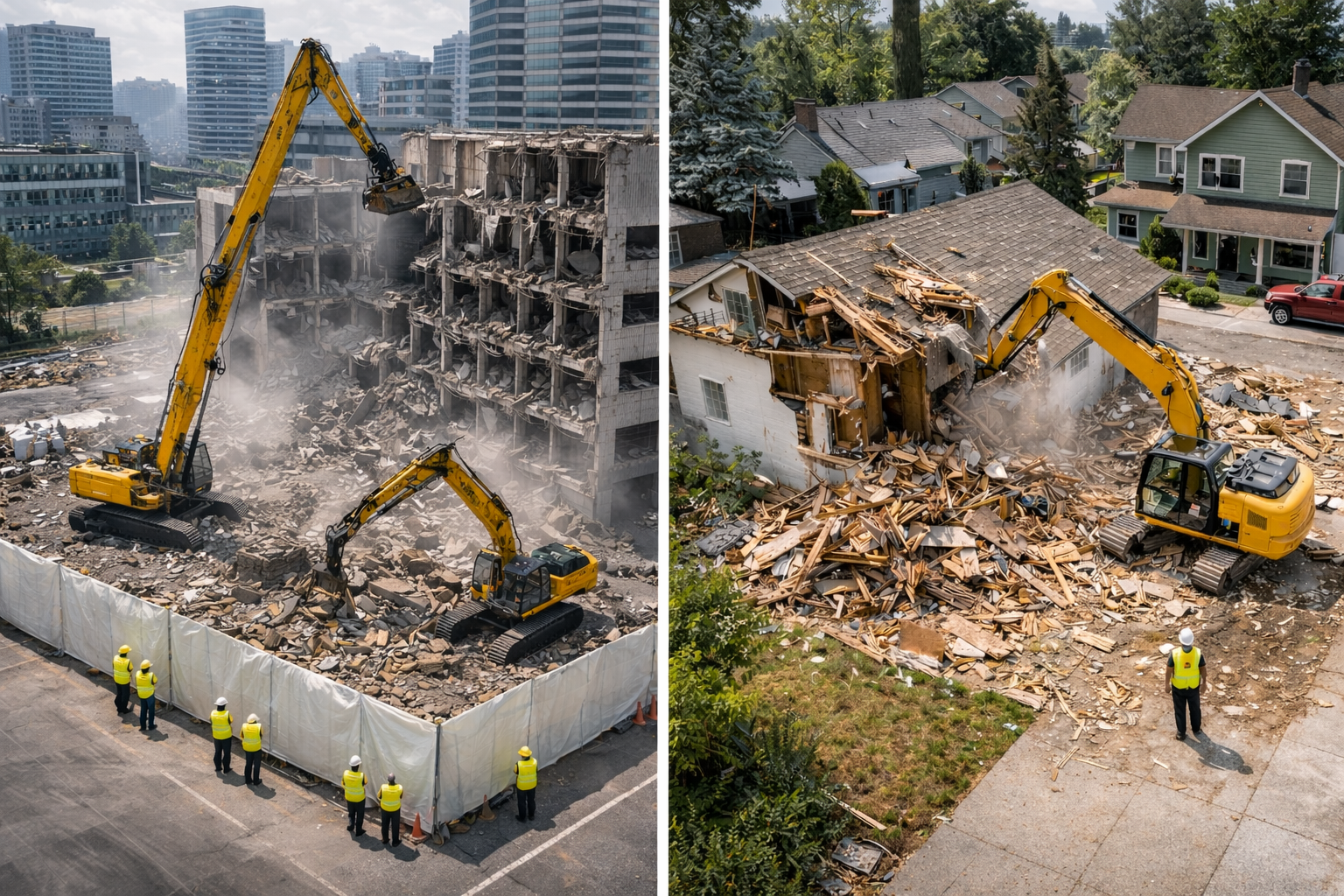
Commercial vs Residential Demolition: Key Differences Every Property Owner Should Know
Commercial and residential demolition may look similar from the outside, but project complexity, risk exposure, and operational planning are very different. Choosing the right approach early improves safety, budget control, and schedule certainty.
1. Scope and Structural Complexity
Commercial projects usually involve larger structures, heavier materials, and more technical sequencing. Residential demolition often focuses on smaller structures, but neighborhood proximity can still require strict dust, noise, and traffic management.
2. Permit and Compliance Requirements
Commercial demolition generally requires deeper compliance documentation, including utility coordination, environmental controls, and site logistics plans. Residential projects may have fewer documentation steps, but they still require local permitting and safety compliance.
3. Equipment and Crew Configuration
Commercial jobs typically require larger equipment, dedicated spotters, and multi-phase execution. Residential projects can run with smaller machinery, yet skilled operators remain essential for selective removal and protection of nearby structures.
The right demolition strategy depends on risk profile, location constraints, and redevelopment goals, not only building size.
4. Safety Planning and Public Impact
Commercial sites may involve high foot traffic, adjacent businesses, and active utilities. Residential sites often involve neighbor-facing concerns like fencing, debris containment, and daily cleanup. In both cases, a written safety plan is non-negotiable.
5. Timeline and Cost Drivers
Commercial timelines are influenced by coordination between multiple stakeholders such as engineers, inspectors, and project managers. Residential timelines are often affected by permit windows and utility disconnect schedules. Understanding these drivers helps set realistic budgets.
How to Choose the Right Demolition Partner
Property owners should evaluate contractor experience by project type. A contractor with proven performance in both commercial and residential work can align demolition method, safety controls, and sequencing with your exact project goals.
When planning your next project in Dallas or the DFW area, compare contractors based on permit experience, safety record, and communication quality. These factors directly influence your final cost and completion date.